 shibi sharkie
The short answer
For repeated unsolicited financing pitches, a similar-purpose preference can be more useful than treating each new number as a separate problem. Keep the scope on new unwanted offers, not every call that mentions a loan.
A new caller ID is not a new reason to listen
The FTC notes that caller ID can be spoofed, so a displayed number is not dependable proof of who is calling. Its unwanted-call guide also explains phone and carrier filtering options.
Not every changed number is spoofed, and not every sales call is a scam. The practical issue here is your preference: you do not want another unsolicited financing offer. That is a narrower and more useful description than declaring every unfamiliar business caller fraudulent.
Choose a call that makes the unwanted purpose clear
Fictional examples
Clear unwanted pitch: “Your company is pre-approved for a new working-capital advance.”
Similar purpose: “We have a business financing offer available for you.”
Different purpose: “We’re returning your requested application call.”
A vague message saying “call me back” does not establish the same purpose. Neither does an assistant merely mentioning the word “loan.” The caller’s own explanation is the relevant evidence.
Teach the pattern, not just this phone number
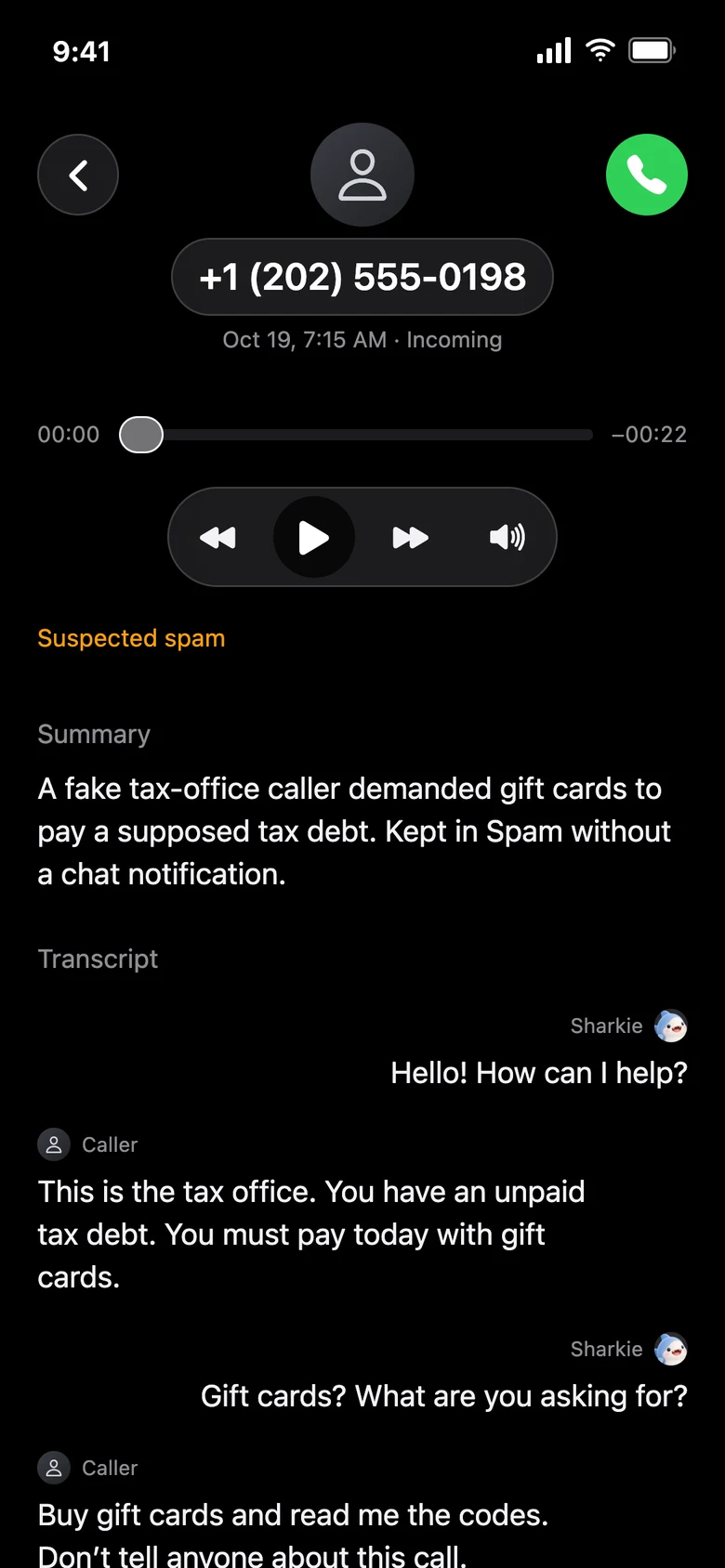
- Open the unwanted call in Calls and check what was actually said.
- Choose Move to Spam calls.
- Choose Filter similar calls too if you want future calls with the same clear unwanted purpose filtered.
Choose Only this call when you only mean the individual item. That does not create a similar-call preference. You can also explicitly ask Sharkie in chat to filter similar unsolicited financing pitches, while preserving calls about your existing account.
Protect the calls you actually asked for
An existing lender discussing account servicing, a decision on an application you submitted, and a new cold sales pitch are different purposes. Do not describe your preference as “anything about loans” if that is not what you want.
Default automatic Spam already evaluates clear unsolicited marketing and scam signals. Your personal similar-call choice adds a more specific preference. Neither mechanism guarantees perfect classification or proves a caller’s claimed identity.
For a previously unseen number, semantic filtering needs conversation evidence. Do not expect it to prevent every initial live alert before the caller has explained the purpose.
Check the result and change your mind when needed
A matching filtered call stays in Spam without a normal chat summary. Review that section when you are expecting an important account-related callback. Bring a mistaken classification back with Not spam — move to Calls.
Restoring one record and changing a future preference are separate. Ask Sharkie to show or update the saved preference if its boundary needs changing. This is call-management guidance, not advice about whether to accept a financing offer. For the underlying scopes, read how smart spam filtering works.