 shibi sharkie
The short answer
You can ask Shibi Sharkie to call a supported U.S. store number and ask a specific stock question. A confirmed answer is not a reservation, purchase, or guarantee that the item will still be there when you arrive.
Specify the branch and the item before asking for the call
“Find me milk” leaves too many unanswered questions. Give the correct branch number, the product, the size or variant that matters, and the one answer you need. Use contact information from the store’s own trusted listing rather than a number from an unsolicited message.
You do not need to give the assistant payment details or store-account credentials to ask a general stock question. Keep the request narrow enough for a short conversation.
A useful request includes a goal and a boundary
Fictional request — use the real store’s number
“Call [the store’s U.S. number]. Ask whether the downtown branch has the unsweetened one-liter oat milk in stock today. If not, ask whether the barista version is available. Don’t buy or reserve anything.”
This states the recipient, the desired item, one acceptable alternative, and what the assistant must not do. It does not ask the model to guess a branch or make a purchase decision.
An explicit supported call request can start the personal call from chat. Asking whether the assistant is capable of calling is different from actually instructing it to place a call.
Choose a task that fits a short call
Sharkie’s current personal outgoing limits are up to 3 requests per rolling day and 2 minutes per call, subject to capacity. A store that answers quickly is a better fit than a long hold queue, an automated menu requiring extensive navigation, or a complicated order.
If the store does not answer or the call cannot be completed, that is an outcome to report, not a stock answer. Do not assume the assistant will keep retrying indefinitely or automatically redial an uncertain attempt. Current limits are described on the pricing page.
Read exactly what was confirmed
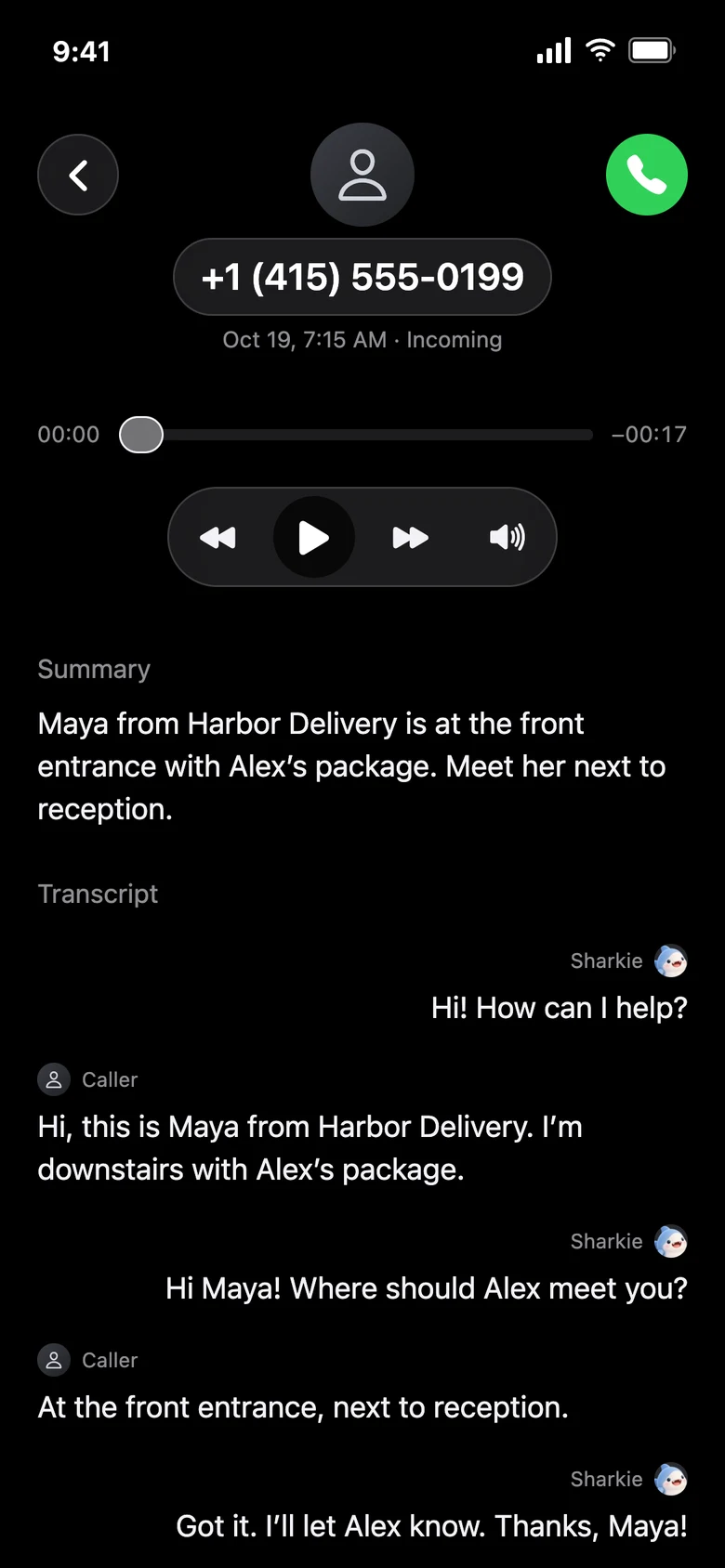
After the call, look for the result in chat and open the call record if the wording matters. “An employee said they have it” is different from “someone checked the shelf,” and neither means an item was held for you.
If the answer was unclear or about the wrong branch, the transcript may reveal the mismatch. Use an available recording when needed. Names, product variants, and numbers can be misheard; do not let a confident summary hide uncertainty.
Handle a changed question explicitly
If you decide the alternative is not suitable, give a new, clear instruction rather than assuming the assistant knows your preference. During an eligible active call, you can also guide privately or take over yourself.
A good result here is a useful answer to a practical question, not an invented successful purchase. The same structure works for asking whether a repair shop accepts a particular item or whether a venue has a specific facility, without authorizing bookings or payments.